
1. The Slit and Drift Technique for the Eye
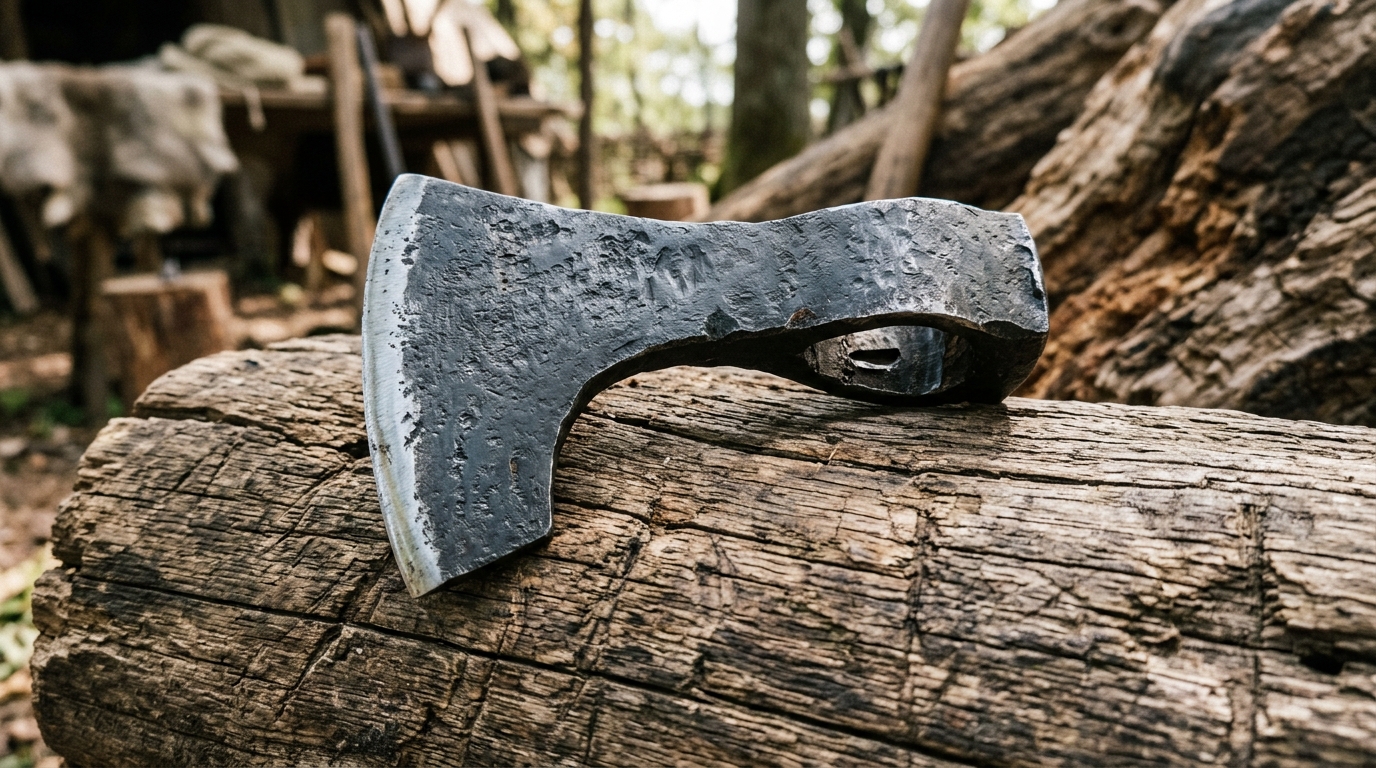
Unlike modern cast axes with uniform eyes, authentic historical Viking axes were forged from solid billets of bloomery iron using the slit and drift method:
- Hot Slitting: Heating a rectangular billet of iron to lemon-yellow heat (2,000°F) and driving a sharp hot slit chisel through the center from both sides.
- Drifting the Eye: Driving a tapered teardrop-shaped steel drift mandrel through the slit while forging the outer cheeks to achieve symmetrical socket walls.
- Drawing the Beard: Spreading the lower blade mass downward on the anvil horn to create the extended hooked cutting sweep.
2. Forge-Welding the High-Carbon Edge Insert
Because high-carbon steel was scarce and valuable in early medieval Europe, smiths forged the axe body from tough, shock-absorbing low-carbon iron, then slit the front lip and forge-welded a high-carbon steel cutting bit into the jaw using silica flux at 2,300°F. This composite construction produced an axe that would never shatter on heavy impacts while maintaining a razor-sharp hardened edge.
3. Hafting Mechanics: Ash, Hickory, and Wedge Geometry
A masterfully forged axe head is only as effective as its wooden haft. Scandinavian craftsmen utilized straight-grained, slow-grown European Ash (Fraxinus excelsior) or Birch root burls. Ash provides exceptional natural shock absorption, flexing slightly under heavy chopping impacts to prevent vibration fatigue in the woodsman's wrists.
The eye of an authentic Viking axe features a subtle dual-taper hourglass profile. When the dry wooden haft is seated tightly and driven with a cross-grained hardwood wedge soaked in pine tar, the timber expands into the flared top of the eye socket, creating a mechanical interlock that will never loosen even through severe seasonal humidity fluctuations.
4. The Historical Evolution into Danish War Axes
As medieval Scandinavian warfare evolved from maritime raiding into organized shield-wall engagements, the bearded utility axe (Skeggøx) inspired the development of the two-handed Danish Longaxe (Dane Axe). Featuring broad, razor-thin cutting arcs exceeding 12 inches mounted on five-foot ash shafts, these composite forged weapons could shear through iron-riveted maille and heavy wooden shields, representing the apex of European early medieval weapon smithing.
Mastering the Anvil Rebound and Hammer Rhythm
The true secret to forging steel efficiently with minimal physical exhaustion lies in mastering the elastic rebound of a quality wrought iron or cast steel anvil. Striking with a relaxed wrist and allowing the natural 80% to 90% rebound velocity of the anvil face to return the hammer to the apex of the swing cycle reduces arm fatigue by more than half.
Every hammer blow should serve a distinct purpose—drawing, beveling, or planishing—with the blacksmith continuously rotating the workpiece between 90-degree orthogonal planes to maintain square geometry before radiusing edges into round or octagonal profiles.
Shop Safety, Eye Protection, and Fire Management
Operating a hot forge requires rigorous personal safety discipline. Always wear clear ballistic eye protection with side shields to guard against airborne slag and flying scale. Never wear synthetic fleece or polyester clothing that can melt onto skin upon contact with red-hot sparks; choose natural heavy cotton denim or leather shop aprons. Maintain an unobstructed 5-gallon water quench tub within arm's reach of the anvil horn for emergency tool cooling and fire suppression.
5. Grinding Geometry and Convex Scandi Bevels
Authentic Scandinavian axes were never ground with hollow or flat bevels; they featured continuous convex profiles (appleseed grind). The convex geometry provides maximum steel mass directly behind the cutting apex, preventing the edge from binding inside green timber and ensuring effortless chip ejection during heavy forest felling and ship timber hewing.